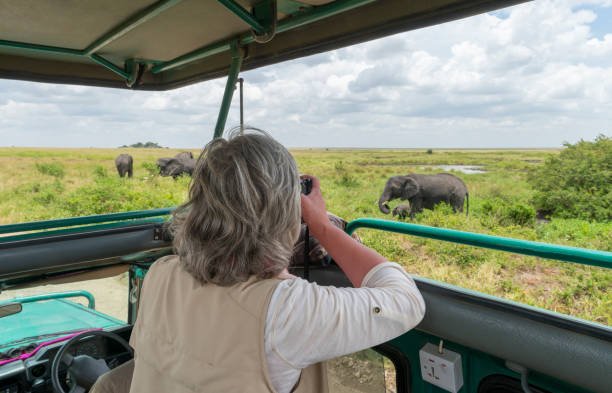
When most travellers think of a Tanzanian safari, the vast plains of the Serengeti come to mind. But for those seeking a more remote, authentic, and untamed wilderness experience, Southern Tanzania is the ultimate destination. Home to giants like Nyerere National Park (formerly Selous Game Reserve) and Ruaha National Park, this circuit offers something magical: the feeling of having Africa all to yourself
However, timing is everything. Choosing the right season can transform your trip from a good holiday into an unforgettable adventure. Here is your expert guide to the best time to visit Southern Tanzania, broken down by season .
The Dry Season (June to October): The Classic Safari
If your dream is to witness the raw drama of nature in high definition, plan your trip between June and October. This is widely considered the prime time for game viewing in the south .
- Unmatched Wildlife Concentration: As the land dries up and water sources vanish, the majestic Ruaha and Rufiji rivers become lifelines. Wildlife congregates along these permanent water sources, making it remarkably easy to spot everything from massive elephant herds to elusive leopards .
- Excellent Visibility: The vegetation thins out significantly. Without tall grass blocking your view, your guides can spot predators from miles away, and you won't miss a moment of the action.
- Walking Safaris: The dry, firm ground is perfect for the southern circuit's most exciting activity: the walking safari. Walking through the bush with an armed ranger is an entirely different way to connect with the land.
Note: Evenings can be surprisingly cool, especially in Ruaha which sits at a higher altitude (around 800m). Pack a warm jacket for early morning game drives .
The Green Season (November to May): A Photographer’s Paradise
Do not scroll past this section thinking the "rainy season" is a write-off. In Southern Tanzania, the Green Season is the secret weapon of seasoned safari-goers. Covering the short rains (Nov-Dec) and the long rains (Mar-May), this period transforms the parks into a lush, vibrant oasis .
- Breathtaking Scenery: The dry, golden savannah explodes into life. Imagine dramatic cloudscapes, deep green hills, and golden sunlight filtering through fresh foliage. It is arguably the most beautiful time of the year.
- The "Little Dry Season" (Jan-Feb): Did you know there is a break in the rains? January and February are known as the "little dry season." The skies clear up, the humidity drops, and the wildlife remains dispersed across the green landscape, offering incredible sightings without the crowds .
- Newborns & Predator Action: This is the calving season. You will witness a flurry of newborn antelopes, zebras, and wildebeest taking their first wobbly steps. Where there are babies, predators follow, leading to intense lion and wild dog action .
The Hidden Gems: Shoulder Months
- November: The start of the short rains. The crowds vanish, and lodge rates drop significantly. You get the last glimpses of the dry season game viewing with the first breath of the green season scenery.
- April & May: The peak of the long rains. While some remote camps close and roads can be muddy, this is the domain of the hardcore adventurer. You will have the parks almost entirely to yourself, and the dramatic storm skies create award-winning photography .
Which Park Should You Visit?
- Nyerere National Park (Selous): Best visited during the Dry Season (June-Oct) for boat safaris on the Rufiji River. However, the birding here during the Green Season is world-class .
- Ruaha National Park: Famous for its large elephant herds and wild dogs. The Dry Season is ideal for big game, while January and February offer spectacular predator sightings as the bush is green but the weather is dry .

 Cookies Consent